Iscriviti alla Newsletter
per continuare a costruire le tue finanze, un passo alla volta. Capire cosa sta succedendo sui mercati non serve a prevedere il futuro, ma a prendere decisioni più consapevoli.
Ben Carlson returns to The Bull to present his new book, Risk and Reward. We talk about the story of Bob the world's worst market timer, how to emotionally survive a diversified portfolio when everything drops together, inflation, bonds and much more.

325. Ben Carlson: common sense rules for the perfect portfolio
Why does doing nothing feel so irresponsible — even when it's the smartest move?
Risk and Reward: why risk is the most important word in investing
The pendulum between fear of volatility and fear of missing out
Passive investing is not lazy. It's the hardest work you'll ever do
Recency bias: why your brain is wired to repeat the last trade forever
The best inflation hedge nobody talks about: a good job
OpenAI, Anthropic, SpaceX IPOs: should index investors be worried?
One rule to survive the next decade: less is more

Ben Carlson 01
Trascritto da TurboScribe. Aggiorna a Illimitato per rimuovere questo messaggio.
Riccardo:
Why, as an investor, does it feel so irresponsible to do nothing, even if it’s the most rational decision to make most of the time?
Ben Carslon:
So there’s this old Roman army rule, and it said that action removes fear, right? And I think it’s the idea that doing something makes you feel like you have your hands on a steering wheel, right? Even if it’s like an illusion of control.
Because if you think, in most aspects of life, the more you do and the harder you work, the better your results, right? If you’re in school and you study more, your grades should improve. If you’re practicing for a sport, you should improve at that sport.
If you work out and go to the gym, your body should improve. The markets don’t work like that. Just because you do more stuff and try harder in the markets doesn’t necessarily mean you’re going to get better results.
And in fact, a lot of times it means you’re going to get worse results. But the problem is that doing nothing actually is hard work because it involves a lot of the work upfront. You have to set your investment guidelines.
You have to create rules in advance. You have to automate good decisions. And so I think doing nothing when your plan calls for it is very hard because you have to make all those decisions ahead of time, not in the moment.
But I think that’s one of the beauties of them.
Riccardo:
Dear Ben, welcome back to The Bull. Glad to be here. Ben, your highly anticipated new book is titled Risk and Reward and not something like the how to get rich or how to build a perfect portfolio or something like that.
So risk is the first word, possibly the most important one. Why have you decided to make risk the ultimate grounding concept of your book?
Ben Carslon:
Yeah, I think just the concept of risk and reward, like the two things are attached to the hip. And I think if you don’t understand one, you’re not going to be very good with the other. And I think risk means different things to different people.
And the whole concept of investing is really about tradeoffs and minimizing regrets. And so I think you have to have like this balance here between the two of them and understanding you have to manage risk, but you also have to kind of get out of your own way so you can get the reward. And so I just think the idea behind risk management and the level of risk you take and how you react to risk is the most important part about being a good investor.
Riccardo:
Yeah, a lot of investors say they understand risk, but they seem surprised every time risk actually shows up. In April 2025, for example, we have the liberation day with all the mess that came along this year, the war with Iran. Every time something happens, people freak out as if it were something completely unexpected, like a black swan, though typically markets drop 10, 20 percent every once in a while.
Why, in your opinion, is the gap between knowing risk and living through risk so wide?
Ben Carslon:
Yeah, Bill Bernstein had this great quote where he said that the only black swans are the history that you haven’t studied yet. And I mean, I think it’s OK to be surprised about what happens in the markets because no one can predict the future. But you just have don’t be surprised that you’re going to be surprised.
Right. Think about everything that happened in this. You mentioned Liberation Day, all this stuff that’s happened this decade alone, the pandemic, trillions of dollars in government spending, sky high inflation, interest rates went from very low to very high in a quick period of time.
We had this really big bond. Yeah, interesting times. Yeah.
Big bond bear market, all this stuff. So I think no one could have possibly predicted that stuff ahead of time or had the understanding that the U.S. stock market would be booming despite it. And so I think the thing you have to realize is that your risk perception is going to change.
Right. People want to take more risk when prices are up and they want to take less risk when prices are down. And so I think you have to figure out a way to sort of steady that, have a steady hand when that stuff happens.
And just understand that even if you study history, which, you know, my book has a really heavy dose of history in it, you’re still going to be surprised about the future. But that that’s not a feature. That’s a bug.
That’s just what happens in this world.
Riccardo:
Yeah. We typically swing in a pendulum fashion between fearing short term volatility and taking less risk than we should and the fear of losing purchasing power in the very long run. And here the risk is not taking enough risk.
What’s your take about this? Because we have these two kinds of risk that seem difficult to reconcile to each other.
Ben Carslon:
Yeah. And I’ve dealt with both of those investors. There are certain investors who just by their nature, who they are, right, their emotional disposition, they’re more conservative by nature.
And then there’s other people who are just more aggressive. And I think it’s really just important to understand, like, which of those camps do you fall in? Are you a person that’s more conservative?
Do you need to sleep at night? Are you a person who’s more aggressive, who wants to like put your foot on the gas pedal? And I think there is no right or wrong answer, but you just have to understand the tradeoffs of those.
And if you’re going to be a person who’s really aggressive, you’re going to have to deal with more volatility and the chance for higher losses. And if you’re a person who’s more conservative in your portfolio, you’re going to have to deal with lower expected returns and maybe you have to save more. So I think you just have to kind of understand, like, who are you?
Which is the risk that’s going to make you, you know, more discomfort, cause you more discomfort, like the being more conservative and missing out on big gains or being aggressive and taking part in big losses? You have to figure out which one works for you.
Riccardo:
Yeah, discomfort is a great word. I’m obsessed with the idea that the equity premium puzzle is all about people bearing discomfort. The vast majority of people doesn’t want the downside of being invested for the long run.
They want long-term returns, but don’t want to shorten discomfort. What do you think about it? Could it be a way to solve the puzzle?
Stocks pay a high premium on average because on average people have structural behavioral issues with bearing the hurdle which comes with investing in stocks.
Ben Carslon:
Yeah. Yeah. The holy grail would be you get, you know, high stock market returns with low volatility, right?
And don’t have to worry about all the bad times. And you just get, you can clip 10% year in, year out. Don’t have to worry about having really high returns, really low returns.
It’d be wonderful if the world worked that way. Unfortunately, it doesn’t. I think the best way for most people to just manage those extremes is through diversification.
And you hold different asset classes that can do different things at different times for you. Diversification is not easy because you’re always going to be holding something in your portfolio that is going to be underperforming. And when things are going really well, you go, why would I have these more conservative, why would I have bonds and cash if the stock market is booming?
And then when the stock market falls, you go, why don’t I have more bonds and cash? And I think that’s the thing. So in the book, I tell a story about Jack Bogle, who famously had a 50-50 portfolio, 50% bonds, 50% in cash.
And he said, half the time I worry that I have too much in stocks. And half the time I worry I don’t have enough in stocks. And I think you have to, if you’re going to be one of those people that goes to the extremes, you have to have some sort of balance there to balance those things out for you.
So you don’t freak out at either extreme.
Riccardo:
Now, it’s a tough time to be diversified because in the aftermath of the wording I ran, every asset class, besides oil, of course, plunked at least for a month. Now, a lot of people keep asking me, so what happened? You told me that stocks are good in the good times and bonds are balanced in bad times and gold is good when wars break out.
But now everything seems to move in lockstep. You know, when the sheet hits the fan, correlations go to one. I imagine a lot of people have been asking you the very same question, Rachel, recently.
What would you answer to this concern, which is a short-term one, of course?
Ben Carslon:
Yeah, I think one of the hard parts about diversification is that all of these asset classes can change shape depending on the environment. And they don’t know. There’s nothing set in stone that this asset class protects perfectly against this risk and these risks.
And so diversification is not the idea that you’re going to be able to protect yourself over days, weeks, months, or even years. Diversification is about surviving long-term cycles. And a lot of asset classes, sometimes bonds really protect you and do well.
But in a case like 2022, the bond market really caused the stock market to sell off. And so I think you have to understand that these correlations, these are the correlations go to one, they’re not set in stone. They’re constantly changing.
But I think that’s actually a good thing about diversification is that sometimes you can have asset classes that are all sort of rowing in the same direction. And sometimes they go in different directions. And that’s just something you have to get used to with a diversified portfolio.
It’s not going to be perfect. It’s not like the Harry Markowitz, you know, efficient frontier where these things are constant and you get the perfect graph, right? It doesn’t really work like that in the real world.
Riccardo:
There’s a great quote in your book about how Harry Markowitz invested. Despite being the father of the modern portfolio theory, he had a very human way to think about his portfolio. Would you expand on that, please?
Ben Carslon:
Yeah, no, yeah. But yeah, he basically said, I could have calculated all the covariances and the correlations and stuff, but instead I just figured out what I would regret less. And that’s what I say, that investing really is a form of regret minimization.
What are you going to regret less, you know, taking part in the gains and the losses or stepping back a little bit and not having as much of either? And that’s a personal question.
Riccardo:
Passive investing is a great concept, but I feel the wording is poor. The word passive is misleading because doing nothing, which is something you talk a lot about, is hardly a lazy attitude in investing. It’s a deliberate choice.
Why, as an investor, does it feel so irresponsible to do nothing, even if it’s the most rational decision to make most of the time?
Ben Carslon:
So there’s this old Roman army rule, and it said that action removes fear, right? And I think it’s the idea that doing something makes you feel like you have your hands on the steering wheel, right? Even if it’s like an illusion of control, because you think in most aspects of life, the more you do and the harder you work, the better your results, right?
If you’re in school and you study more, your grades should improve. If you’re practicing for a sport, you should improve at that sport. If you work out and go to the gym, your body should improve.
The markets don’t work like that. Just because you do more stuff and try harder in the markets doesn’t necessarily mean you’re going to get better results. And in fact, a lot of times it means you’re going to get worse results.
But the problem is that doing nothing actually is hard work because it involves a lot of the work up front. You have to set your investment guidelines. You have to create rules in advance.
You have to automate good decisions. And so I think doing nothing when your plan calls for it is very hard because you have to make all those decisions ahead of time, not in the moment. But I think that’s one of the beauties of them.
And you’re right, it feels irresponsible to sit there on your hands and do nothing when it feels like the world is changing at a crazy pace, right? And all these headlines are happening, and you just go, yeah, I’m not going to make any trades this month because my plan tells me not to. A lot of people just don’t have the ability to do that because we humans, action makes us feel like it provides us comfort, especially in the markets, right?
Riccardo:
Yeah, it’s a superhero power. I receive at least 50 to 100 notifications every single day from CNBC, The Wall Street Journal, Financial Times, and so on and so forth. I’m overwhelmed by news and noise most of the time.
It’s hard to stay put because we all feel compelled to do something as the world seems to be falling apart at least three to four times every year.
Ben Carslon:
And it’s harder than ever these days because the old thing for financial advisors used to tell people, like, just ignore the noise, right? That’s great advice, but I think it’s impossible. You talk about all the alerts you get on your phone.
In the information age, it’s impossible to ignore the noise. So I think what you really have to do is have some filters on your noise and figure out, like, well, what is the stuff that I’m going to react to? Like, there are certain things that, yes, you can react to because it changes the risk reward framework of your portfolio or whatever.
There’s certain buy and sell triggers, right? If A happens, I will do B. But I think that’s the idea, is that you have to have some sort of filters in place.
Because if you just try to pay attention to everything that’s going on and all the alerts and everything, it can be so overwhelming these days because the noise is relentless.
Riccardo:
One of the typical questions I receive is about investing at all time highs. To be fair, it’s been hard not to invest at all time highs, at least for the last 15 years. And in general, markets spend the most of the time at all time highs.
I know I asked you about Bob last year, but I can’t help but recall his story again because your post about Bob was your most read of all time. So he deserves a bis. Would you please recall Bob’s story to help anyone being less obsessed about investing at all time high?
Ben Carslon:
And I wrote that piece back in 2014 because the stock market didn’t hit new all time highs until 2013 after the great financial crisis. So it was like six years between all time highs, right? There was a crash and it took us a while.
And when we hit all time highs again, people got really nervous and they said, oh, no, what if this high is just like the last one and we fall off a cliff and there’s no net to catch us? And so I said, okay, fine. What if you did just invest at all time highs and you were the world’s worst market timer?
You kept all of your money in cash and then when an all time high hit right before a huge peak in the market and there was a crash, you invested. And so Bob invested before the 1973, 74 bear market where the stock market got cut in half and right before the 1987 crash and then before the dot com bubble blew up and right before the great financial crisis in 2008. And those were the only purchases he made.
But the secret was he stayed invested. He put the money in at the peak, but then he stayed in the market, right? So even investing right before the 1987 crash when stocks fell 20% the next day and they were down 30% in a week, Bob kept investing.
And actually his results were pretty good and he ended up a millionaire because the money kept growing and compounding. Now the alternative side of that is I looked at, well, what if Bob would have invested at the very bottom of the market, right? He kept all his money in cash, built up cash until the bottom.
He did better than that way. But it’s funny that he actually would have done even better than both of those instances, right? Better than buying at the top and better than buying at the bottom if he just would have dollar cost averaging the market over time.
Right? So even if Bob was the greatest market timer of all time and he could pour all his cash and invest only at the bottom, he still would have done better just putting it in and letting it go because of the power of compounding. Right?
So it’s, it really is a good, and when I ran the numbers for that post, I remember when I first did it, I was kind of surprised like, wow, this is way better than I thought it’d be, surprisingly. And it’s just the power of compounding over time that, that a long enough time horizon can sort of smooth out some of your timing mistakes if you just happen to have bad luck about when you put money in the market.
Riccardo:
I admit, I often think about Bob during the market’s very red days and I eventually think in the end, Bob did fine anyway. Yeah, he did okay. There’s another great point in your book, which I relate a lot.
Very often I’ve been asked things of the like, if stocks are the highest reward in assets, why should I bother investing in anything else like bonds or bills or gold commodities or whatever? In the long run, stocks will likely come ahead. Like this book, Stocks for the Long Run, explains beautifully.
The problem is stocks in the long run are great investment, but we live in the short run. How would you suggest aligning long-term goals and expected returns with short-term needs and emotions here and now when it comes to find one’s own right portfolio?
Ben Carslon:
Yeah, so when he won the Nobel Prize for Behavioral Economics, Daniel Kahneman, the author of Thinking Fast and Slow, said one of the reasons it’s hard to focus exclusively on the long-term because the long-term is not where life is lived, right? You live in the short term. And so some people need an emotional hedge or a behavioral release valve, even if the numbers tell you, like the spreadsheet tells you, you’re young, you should have all your money in stocks.
And some people have the ability to do that, but some people just don’t. I heard from a younger person this week, he said, I’m in my 20s, but I have a 60-40 portfolio. Is that crazy?
And he said, the reason I do it is because I know myself and I can’t handle having all my money invested in stocks. He’s like, what do you think? And I said, as long as you know yourself, and you know, if you had 100% in stocks and you couldn’t stick with it, and you just bail at the first sign of volatility, then having a more diversified portfolio makes sense, even if it’s not optimal on paper.
I just said, you have to just be comfortable with those trade-offs. Maybe you have to save a little more because your expected returns are going to be lower. But if you need that emotional hedge, I think that’s okay.
If you need some cash or some bonds or something else in your portfolio, and it provides you peace of mind and a margin of safety and the ability to sleep at night, as long as you’re willing to accept the trade-offs, that’s okay with me. I always like to say that the good portfolio you can stick with is way better than the perfect portfolio that you’re just going to bail on.
Riccardo:
Speaking about Kahneman, he made the concept of bias a foundational part of modern finance. There are a lot of well-documented biases about how people mostly behave when it comes to money. One of the most impressive ones, in my opinion, is extrapolation.
People tend to pick short-term trends and extrapolate that into the future, which is what creates a short-term momentum and beautiful stories people adopt as if they will last forever. What do you think about it? Do you see this tendency to extrapolate, to be obsessed with FOMO in the good times, fear of losing money in the bad ones?
The reason why most of the fall for short-term stories and end up missing the great scheme of things?
Ben Carslon:
Yeah, it’s really hard to have that mindset because of recency bias. There’s been studies done that show when people see something happen three times in a row, our brain automatically thinks it’s going to happen a fourth time in a row. It’s automatic for us.
We’re pattern-seeking creatures, and it’s just easier that way if we think we can see a pattern. It’s interesting because after the 2008 financial crisis, everyone was preparing for a crisis again. How will we protect against the next crisis?
Let’s invest in a black swan fund. Now, in the 2020s, it’s the opposite. Back then, people were thinking way too conservatively.
Now, we’ve gone to the other side of the boat, and people are going, well, geez, this bull market, every time the stock market falls a little, it just comes roaring back immediately. We haven’t had a recession in forever, and we haven’t had a credit cycle or a big financial crisis. It just seems out of sight, out of mind.
These things can’t happen anymore. I think you need a reminder for both of those people that after the really bad stuff happens, a lot of times, good things happen. After really good things happen, sometimes bad things happen too.
I think you have to be willing to have those two competing thoughts in your mind that the trees don’t grow to the sky. It’s really hard when you see these patterns, especially this decade. Every time the stock market falls a little, we have a V-shaped rally.
People go, well, investing is easy. It falls a little bit, I buy, and it comes right back. How hard can this be?
There are going to be times when it’s not going to be that easy. I think sometimes you just need reminders. That’s why I try to study market history because it does prove a good reminder that everything is cyclical, even though some cycles tend to last longer than others.
This has been a pretty long one, if you think about it.
Riccardo:
Do you see a change in market patterns when it comes to this specific fact? Since the pandemic, we had a V-shaped crisis with legions of retail investors that basically bought all the dips, which is actually the brand new thing that came along in the last five, six years. Do you think that this has somehow changed how markets behave?
Because now retail investors made a huge portion of total trades. Up until 2020, 25% of total trades are made by retail investors in 2026.
Ben Carslon:
It is interesting because I think that retail investors are now better behaved than they were in the past. Because in the past, there was the whole thing that you don’t want to run out of the store when the stock market goes on sale, right? And I think a lot of people have learned that lesson, right?
If things fall and volatility picks up, that’s actually when you want to buy. I think a lot of people have learned that lesson, which is a good thing. The problem is what happens when it lasts longer than a few months.
The question is, in the information age, have these cycles just sped up? Are they just going to be faster than they were in the past? I don’t know that for sure, but it sure feels like that, right?
Because we process these things quicker and governments are quicker to act. So I think you have to ask yourself, what are the risks of that? If you just step in and buy every time the stock market falls 10%, how do you feel when it falls 20% and then 30% or whatever?
We have a real crash. We won’t know until we live through one of those. I think that’s the hardest thing for young investors, is that you don’t really know how you’ll react to a financial crisis situation until you’ve lived through one.
So it’s hard to say.
Riccardo:
Yeah, it’s very interesting to see it because we had a lot of innovations over the last two decades, like ETFs, index funds. They made investing very accessible to a lot of people everywhere in the world. And millions of people have learned that investing for the long run is typically a good idea.
Now, my question is, is it mostly about people more informed about good investing, more informed retail investors, or just delusional people not believing that a new financial crisis could come along any longer?
Ben Carslon:
Yeah, it’s interesting. Obviously, those things don’t happen very often. That was the biggest mistake people made after 2008.
People kept trying to predict, when’s the next big crash going to hit? Well, guess what? These things don’t happen very often.
That could have been a once in a lifetime kind of deal. Maybe Charlie Munger used to say, two to three times in your investing lifetime, you’re probably going to have to see the stock market get cut in half.
Riccardo:
Yeah, cut in half.
Ben Carslon:
Yeah, right. But that doesn’t mean it happens all the time. It’s something that you could be planning for.
So, that’s a low probability event. I like the idea of using probabilities when investing. So, I think you have to give yourself a range of outcomes.
That could happen. The stock market could get cut in half. But it’s a pretty low probability event that it’s going to happen tomorrow.
More likely, the stock market’s going to go up. And so, I think you have to set some baselines in terms of, here’s the baseline, what I think will happen. But here’s the outlier events, the really big crash that’s going to happen at some point.
Is that going to happen in five years or 10 years or 20 years? I don’t know. But you still have to create a portfolio that’s durable enough or have enough intestinal fortitude to be able to withstand one of those types of crises.
Because it is really difficult to do. I lived through the 2008 crisis. I was just a young investor at the time, which was a good thing for me because I was putting money in.
The stock market is crashing. It was down almost 60%. I was putting money in.
It might be harder for me to withstand that if it happened now, because I have a bigger portfolio. I was much younger then. I didn’t have as much at stake.
Now, I have a more mature portfolio. I have more money invested. It would be more painful for me to lose half of my wealth in the stock market than it would have when I was 25.
So, the way that I look at it is, risk means different things to different investors at different points of their life cycle. A bear market is way more risky to a retiree who has no more income coming in than it is to a young person in their 20s who’s investing. If you’re in your 20s, you should hope for a financial crisis.
As long as you keep your job and keep investing, you can put money in at really low prices. But that’s really painful for someone who has a more mature portfolio.
Riccardo:
Don’t tell Michael Burry that great financial crises don’t happen very often because he forecasts a new great financial crisis coming soon, every quarter or so. Yeah, they really want to over the last five years, the leading role has been played by inflation. It was forgotten after the great financial crisis, we had basically zero inflation in the Western world, but now inflation has come back, and there’s a significant risk it’s here to stay for the years to come. When thinking about what the best hedge against inflation is, people generally think about things like gold, commodities, tips, real assets, these kinds of things.
In your book, you made a great point highlighting that one of the best inflation hedges is actually an underappreciated one, a good job. Would you expand on that, please?
Ben Carslon:
Yeah, I do think that inflation, you’re right, it was this thing that was hidden for so long and people didn’t really know how to react to it. But I think we’ve proven that it’s a really big psychological hurdle for people. People are really angry about inflation and seeing prices rise.
And so I said, one of the things that most personal finance people don’t pay attention to enough is your income, because they talk a lot about saving money, right? How do you be more frugal? How do you save money?
How do you invest? But not a lot of people talk about, well, how do you make more money? And I think if you can increase your wages faster than the rate of inflation, that’s a great hedge, because it means you can save more.
It gives you more of a margin of safety. It gives you more of a fallback plan. And so I think becoming indispensable at whatever job you’re doing is really important, because as you know, you could be the world’s greatest investor.
But if you don’t have enough money to invest and you can’t save, then it doesn’t matter how great of an investor you are. So you need to get that piece down first. And it’s hard to save a lot of money if you don’t make enough money.
Riccardo:
With inflation spiking in 2022, bonds had a brutal reset and many investors felt somehow betrayed by the supposedly safest part of their portfolios. Although bonds simply behaved as they were supposed to do when interest rates go from zero to 5 percent, they can only go down in price when rates go up. So it’s just in the nature of bonds to behave in that fashion.
But it came as a huge surprise to most of the people. In your opinion, is the case for investing in bonds still intact despite massive debts, fiscal dominance, inflation looming and all this stuff going on?
Ben Carslon:
I think bonds used to be like a one decision asset class when rates were falling. And it was like, just own government bonds, some high quality something and you’ll be fine. Rates are falling.
It doesn’t really matter what you own. And I think what people have learned this decade is that maybe they need to be more intelligent about how they diversify their bonds. And so that could be owning things like tips that hedge against inflation, even holding like a cash like position like T-bills or a money market or something that is more short term in nature.
That’s a good hedge against rising interest rates because any sort of ultra short term bonds or cash adjust really quickly to rising rates. And then government bonds protect you against deflation and falling rates and these types of things. And I think the one good thing to come out of this is that we had, you know, really, really low rates.
And in Europe, you guys had, in some cases, negative interest rates, right? And so there was no margin of safety. There was no income.
There was no yield. If bond yields went up a little bit, your prices got crushed. Now we actually have yield across the globe, right?
There’s higher rates. So we had to go through a painful bond bear market to get here. But now at least there’s like U.S. government bonds are yielding 4 to 5 percent now, right? Which is not like awesome, but it’s way better than it was through most of the 2010s and then at the beginning of the pandemic. So yes, there’s been some pain in the bond market. But the good news is now that we live through that, there’s higher yields on the other side of it.
Like that’s what bond investors wanted. They just didn’t want to have the bandit ripped off so quickly and get crushed in the meantime. But we’ve we’ve lived through that now, you know, the future is like the stock market is hard to predict in terms of what the returns are going to be.
The bond market is pretty easy. You take your starting yield and then you take away any like defaults or credit events. And that’s in five or 10 years, that’s going to be pretty close to what your return is going to be.
So, you know, 4 to 5 percent a year in bonds. It’s pretty good.
Riccardo:
Yes, there’s even a mathematical stance that twice the duration minus one year is when a bond portfolio typically delivers the starting yield. It’s a very mechanical correlation. But people tend to forget that when bond prices go down, future returns go up.
Ben Carslon:
Right. You’re right. It’s more math in bonds, right?
It’s more math than in the stock market.
Riccardo:
Yeah. And when it comes to stocks, there are very smart people who think that stocks behave the same way. For example, we had here John Cochrane and John Campbell.
They have been very clear about it for a very long time. When valuations are higher, future returns are lower and the other way around. Now we have sky-high stocks valuations and the stock market is led by a handful of megastocks.
These are all warning signs. Recently, you wrote about the possibility of a market melt-up. What’s your point of view?
It’s a rational melt-up or is an excessive frenzy?
Ben Carslon:
See, the hard thing about valuations is that Peter Bernstein wrote about this in his book Against the Gods, which is a classic. He said the hardest part about mean reversion is what happens when the mean itself, the average, is moving. And I think that’s what we’ve seen.
Like valuation, yeah, valuation is a moving target because the companies are so much different these days. They’re more efficient. They need fewer employees.
They don’t need as much capital reinvestment. The margins are way higher in these companies. That’s why I think it’s been so difficult.
For anyone who’s been a valuation bear on the U.S. stock market, and a lot of them have been for the past 15 years, I think they just missed out on the fact that the companies of today are nothing like the companies of before. So that’s part of it. I think that makes it difficult.
Yeah, even accounting principles are different. Yeah, exactly. There’s just a lot of different things.
People like to say like, oh, this time is different. Like, actually, things are different sometimes, right? It’s funny, John Templeton said the foremost dangerous words in investing are this time is different.
And later in his career, he got in an interview and he said, actually, 20% of the time, things really are different. So sometimes you have to have an open mind about these things. So as far as like the melt up goes, it’s interesting because there is people been waiting for mean reversion in U.S. stock prices for a long time, right? They’ve been high above average, right? Especially if you look at the technology stocks, the NASDAQ 100. It’s up like 22% per year for the past 10 years, which is ridiculous, right?
That’s an insanely high number. And so obviously that can’t last forever. But you mentioned like the pendulum swinging earlier.
It’s really hard to know how far it will go in either direction because the NASDAQ crashed 80% after the dotcom bubble. So for 12 or 13 years, technology stocks went nowhere. Now they’ve had, you know, 15 or 16 years where they’ve just gone through the roof.
And so I think you just have to allow the possibility, especially in an environment like this where there’s information and you talk about like extrapolating. That’s what happens in an innovation bubble like this. If you want to call it a bubble is people to extrapolate to the future.
And so trying to get in front of that train and call like this is going to be the top or this is going to be when things turn. I just think that’s really, really hard. And I don’t think anyone has the ability to do it, especially on a consistent basis.
If anyone calls the top of this market, it’ll be purely by chance or luck.
Riccardo:
Yeah, AI is obviously the leading force in markets nowadays. But besides the stock market and thinking more broadly about AI across the board, are you more in the team AI will destroy any job in the world or team AI will boost productivity at the sky high level or team AI would slightly improve productivity. But in the end, much ado about nothing.
Ben Carslon:
I think it’s it’s OK to have both of those ideas in your mind at once that there’s been plenty of technological innovation that has has upended jobs over time. I think people what worries people the most about this one is that it might happen really fast. Right.
We went from like an agricultural society where 85 percent of the world worked on a farm essentially to people working in factories and stuff. But that took place over multiple decades. Right.
And it was pain. It was painful for a lot of people on the farms that had to move and do something new like that transition period. And I think that’s what you could see the transition period.
I think one of the greatest things about the global economy is just how dynamic it is. Like there’s there’s tons of new jobs that could create it all the time. You and I are talking on a podcast.
These things didn’t exist 20 years ago. Right. It’s a whole new thing.
People are delivery drivers now for DoorDash and they drive Uber and all these things that didn’t exist anymore before now exist. I do think I’m hopeful that AI is going to create a lot of new jobs that we don’t even can even comprehend right now. Right.
And it’s going to end if it increases productivity. I think that’ll be a big part of it because there’ll be more wealth and more ability. And I think I also think it’s going to make it easier for people to start new businesses on their own.
Right. The tools that you have available, the knowledge you have to start do a startup on your own. It’s those barest entry are gone.
So I am hopeful in that. I do think the transition period getting from here to there could be kind of tricky. And that’s that’s the hard part is is being you can be both positive and negative about it, I think, at the same time.
Riccardo:
Yeah. Maybe the pace is unprecedented, not the pattern.
Ben Carslon:
Yes. Yes, exactly. It’ll be it’ll be.
And I think that’s true with everything these days. And I think that’s why it’s so hard for people to keep up with what’s going on these days, because it’s like, gosh, it’s happening so fast. You mentioned all the alerts like things are happening here, here, here.
And markets are moving faster and technology is moving faster. It’s really, really hard to keep up. That’s why getting this back to investing.
I think it’s harder than ever to have a long term mindset because there’s so much going on in the short term. So how how are you able to be patient in the face of all this change that’s going on? And it seems like, geez, I should be doing something, anything right now, but being a long term investor, which sounds really boring in the face of this.
Right.
Riccardo:
The three big players, the two plus one big players in the AI field are, of course, open AI, Anthropic and somehow SpaceX, because Grock is embedded in the company. Now we’re going to witness possibly the biggest IPOs of all times, starting with SpaceX in a few weeks. What’s your feeling about it?
Because as an index investor, I’m a little bit concerned over these huge companies that suddenly become top holdings in an index like VSNP 500. Should passive investors worry about buying great companies only after private investors had captured a lot of the upside?
Ben Carslon:
Yes, I think that’s been a worry for a while now because so many of these companies, there’s so much more money in the private markets now than there was in the past. And all of these companies are able to stay private longer. And there hasn’t been much of an IPO window.
It’s funny, a lot of these companies haven’t come public. Like these ones are going to be big, huge companies. A lot of these companies haven’t come public because the ones that have gone public from private, their public markets haven’t done very well.
Right. They come public and then their stock market doesn’t. Like Airbnb came public in 2021 and the stock has essentially gone nowhere since then.
Right. I guess the really good news for index investors is that this has been a worry now for 10 or 15 years. It’s been a big trend and it hasn’t impacted stock market returns yet.
Right. You could say, well, it could have been better. But, you know, like I said, the Nasdaq is up, I don’t know, 16 percent per year over the past 20 years.
And that’s in a time when more companies have been going private. I guess the counterbalance there is that all the big mega caps, Facebook and Apple and Amazon and Google, like they’re buying up companies as well that were private before. Right.
Facebook bought Instagram. Right. I just saw a stat this week, Instagram Reels is now doing more content than like Netflix.
Right. It’s it’s so I think a lot of these big companies have pulled in a lot of that private capital as well. So I think there’s been a little bit on both sides of the aisle.
But you’re right. If we’re going to get a one or two trillion dollar company like SpaceX coming out and it’s going into the index, you did miss out on all those gains. And I can see why that would concern you as an index investor.
Riccardo:
Market cap index funds give more weight to recent winners, which is a feature for some people and a bug of index investing for others. Today, I read that the top 10 stocks make 41 percent of the S&P 500, which is a new high. Would you suggest that tilting portfolios toward cheaper stocks like value stocks to capture future main reversions?
Ben Carslon:
Yeah, I I like the idea of diversifying, like the people who try to time the market and say, hey, I’m just going to go to cash. I would much rather you diversify into something else. Like if you’re really concerned about because there’s a lot of people who are worried about concentration and what happens when this AI bet blows up, if it does, it’s going to be really painful because these stocks are such a big part of the overall stock market.
So in my book, I read about the Wright brothers when they were trying to get their first plane off the ground. They brought all these extra parts with them because they knew something bad could happen. I think that’s kind of the idea behind investing, whatever.
And it’s funny, you could you could tilt your portfolio to a bunch of different things right now that are way lower valuations than the S&P 500 or the Nasdaq, right? Small caps or mid caps, international stocks, emerging markets, value stocks, high quality stocks, dividend stocks, whatever it is. And it’s never been easier to diversify these things.
So I think you look at them as like a complement, right? It’s complementing that other sort of growth momentum side of your portfolio. And it does seem like that’s true where those, you know, if they don’t have as much tech exposure, they’re not going to be hit as bad.
And so I think that that is an intelligent way to sort of hedge the risk of AI if you think that there’s going to be some sort of blow up down the line.
Riccardo:
Last question, the most difficult one. If you had to give one practical rule to an investor who wants to survive the next decade, this very interesting decade before us, what would it be?
Ben Carslon:
OK, my favorite advice, it’s three words. Less is more. OK.
Wow. And I think it’s harder than ever. Again, getting back to like the AI stuff.
So I keep mentioning how things are getting faster and there’s more information. We’re drinking out of this fire hose of information every day. AI is only going to make that worse, right?
The ability to create content with AI is just going to there’s going to be it’s going to be everywhere. Everyone will be able to create content if they want to. So the idea behind less is more to me for the next decade is about like having some filters and limitations and guidelines on your process.
Right. So Josh Brown, my colleague, says that any good investor, any good wealth manager is like a bouncer sitting outside of a club. Right.
You got your nice suit on. You’re standing behind the velvet rope and you’re not letting anyone in basically. Just OK, a few of you can come in, but most of you, nope, you can’t.
You wait in line. I think that’s how you have to think about investing these days is having some limitations on your process. So you you define the things that you will invest in.
Right. These are these are the strategies or asset classes or fund types that I will invest in. But these other types of strategies and other funds and other investments, you know, they may be good for someone else, but not for me.
I think having those limitations is going to be more important than ever, because otherwise you’re going to your head’s gonna be spinning because there’s so many different things that you can invest in these days. And there’s so many ways you can change your portfolio. If you don’t have limitations on your process, it’s really easy to make mistakes.
Riccardo:
Ben, it’s always a pleasure to have you here. If it’s going to be possible, it would be great to meet you in person in the future. You have a huge fan base here in Italy, thanks to your wonderful blog, A Wealth of Common Sense, which is my non-negotiable daily routine.
Ben Carslon:
All right. Thank you.
Riccardo:
Yeah. Thank you so much for your daily work for us and see you soon. Bye bye.
I tassi USA sono tornati ai livelli più alti dal 2007, ma non tutti i tassi influenzano allo stesso modo mutui, conti deposito e BTP. In questo episodio vediamo quali contano davvero e le tre cose da ...

Il mercato delle obbligazioni si sta ribellando ai governi che spendono senza un piano credibile: i rendimenti a lungo termine salgono, e non perché ci si aspetti più inflazione, ma perché prestare a ...

Secondo episodio della The Bull Summer School. Parliamo di liquidità e di come gestire i sldi che devono restare disponibili senza lasciarli semplicemente fermi sul conto. Confrontiamo conto deposit...
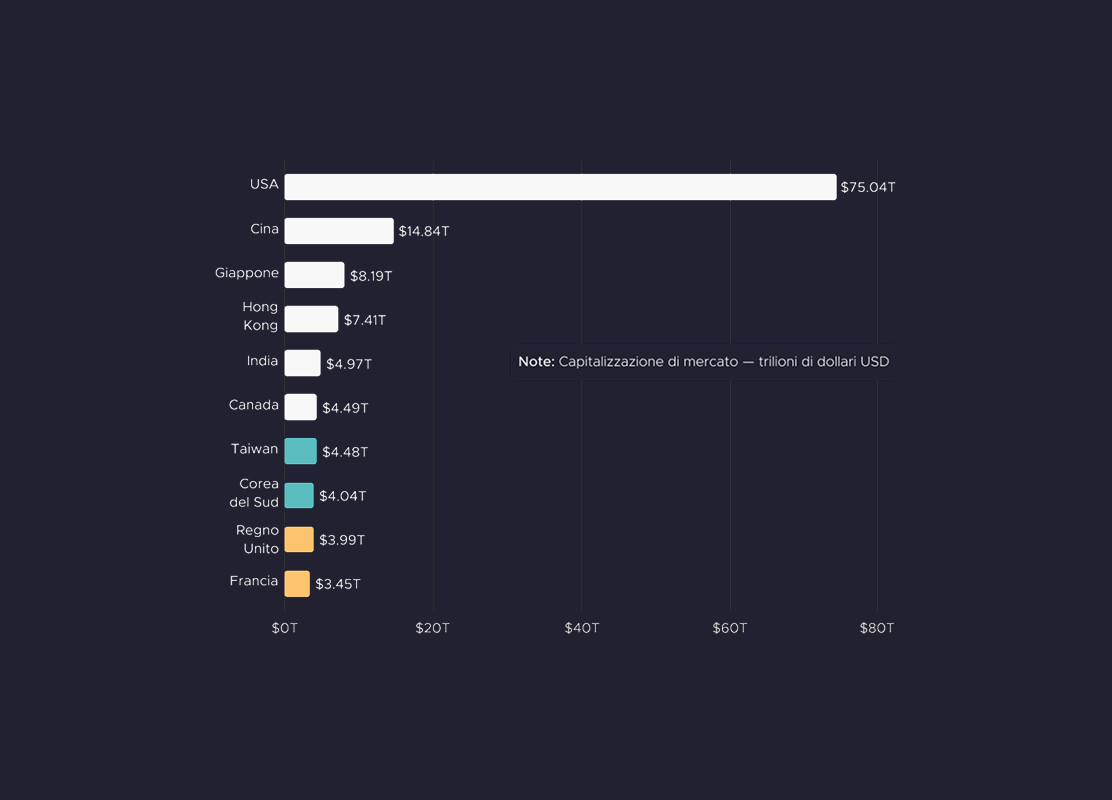
Sei mesi di mercati, cinque asset class, una lezione sola: investire funziona proprio perché è scomodo. In questo episodio ripercorriamo cosa hanno fatto azioni, obbligazioni, oro, materie prime e val...

Alberto Dalmasso ha costruito uno degli unicorni italiani più noti al mondo. In questa conversazione partiamo dall'IPO di SpaceX, perché gli italiani risparmiano ma non investono, e dove sta andando ...
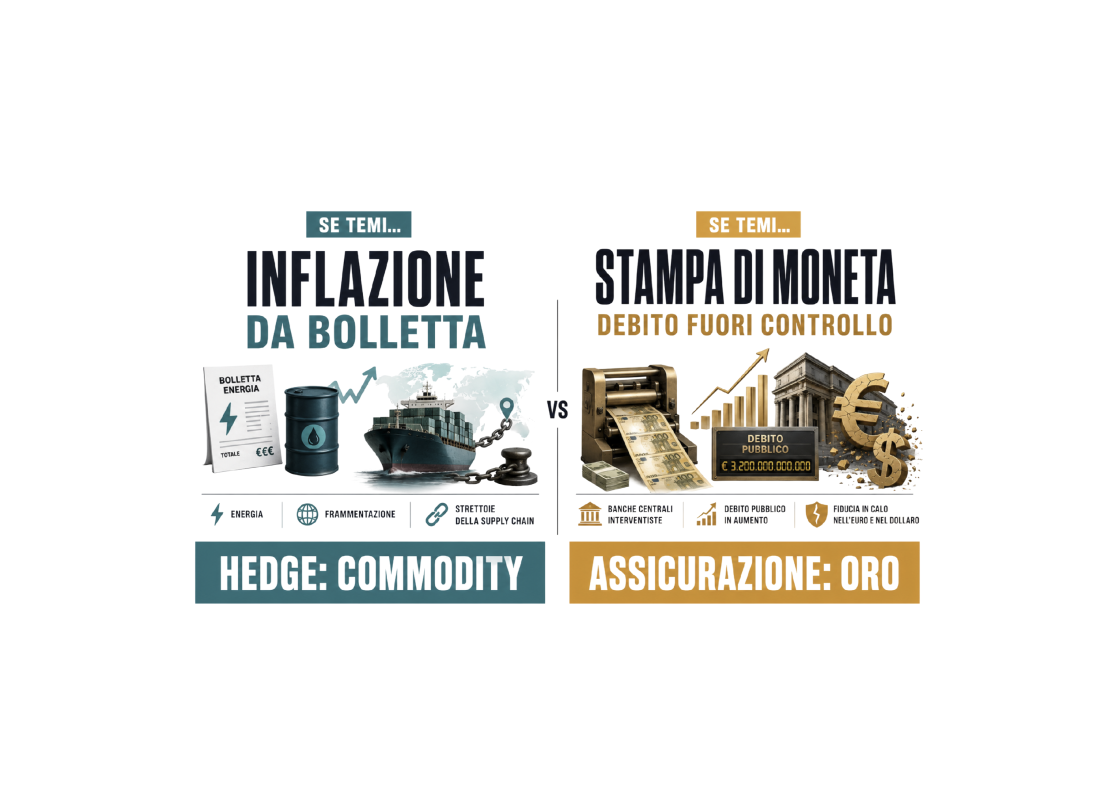
Negli ultimi mesi inflazione e tassi hanno sorpreso tutti, ribaltando uno scenario che fino a poco tempo fa sembrava scontato. E se il 3-4% fosse semplicemente il nuovo normale, cosa cambierebbe per i...
Quando capisci come funziona la finanza… ti viene voglia di raccontarla!
La mia ignoranza in materia mi ha sempre creato dei dubbi, ma grazie a un amico ho iniziato ad ascoltare il podcast. Per fortuna che ho 24 anni e un po' di tempo e soldi da dedicarmi a imparare le varie nozioni per me stesso. Grazie mille!
Luca G. 10 Ott 2025Dovrebbero ascoltarlo buona parte degli italiani e io avrei dovuto scoprirlo con qualche anno in anticipo ma meglio tardi che mai
Matteo C., 3 Set 2025Veramente interessante, chiaro e conciso. Cambia la vita finanziaria di chiunque.. da ascoltare assolutamente anche per chi di finanza non vuole occuparsi mai
Francesca B., 6 Apr 2024Ho acquistato e letto il suo libro e l' ho trovato. Esprime i concetti economici in modo semplice e chiaro. Sentirlo parlare conferma che è un professionista del settore.
Giulia N., 11 Ago 2025Podcast piacevole, scorre veloce ma in modo estremamente chiaro, spiega i concetti chiave per gestire le proprie finanze, fornendo la classica cassetta degli attrezzi. Complimenti, davvero ben fatto!
Massimiliano, 29 Mag 2024Non sono solito a mettere recensioni e specialmente non ascolto podcast, ma da quando ho iniziato questo, faccio fatica a staccarmi, e quasi non posso più fare a meno di ascoltare e arricchirmi culturalmente.
Andrea V., 22 Set 2025Riccardo mi ha letteralmente cambiato la vita e fatto scoprire che amo la finanza, ho ascoltato il podcast già due volte e non mi stufo mai di ascoltarlo, parla in modo semplice e chiaro
Massimo D., 23 Set 2025Veramente veramente raccomandato! la finanza personale riassunta alla perfezione! e spiegata partendo dall'ABC! Ottimo anche da ascoltare a velocita 1,5x!
Giorgia R., 23 Gen 2025Da quando l'ho scoperto in 15 gg mi sono ascoltato 150 puntate senza fermarmi, ho annullato gli altri podcast per portarmi alla pari ed ascoltare tutte le precedenti puntate, ben fatto, esattamente il livello di informazione che mi serviva
Gianluca G., 11 Set 2025